Vintage Academic Book Cover Aesthetic
Prompt
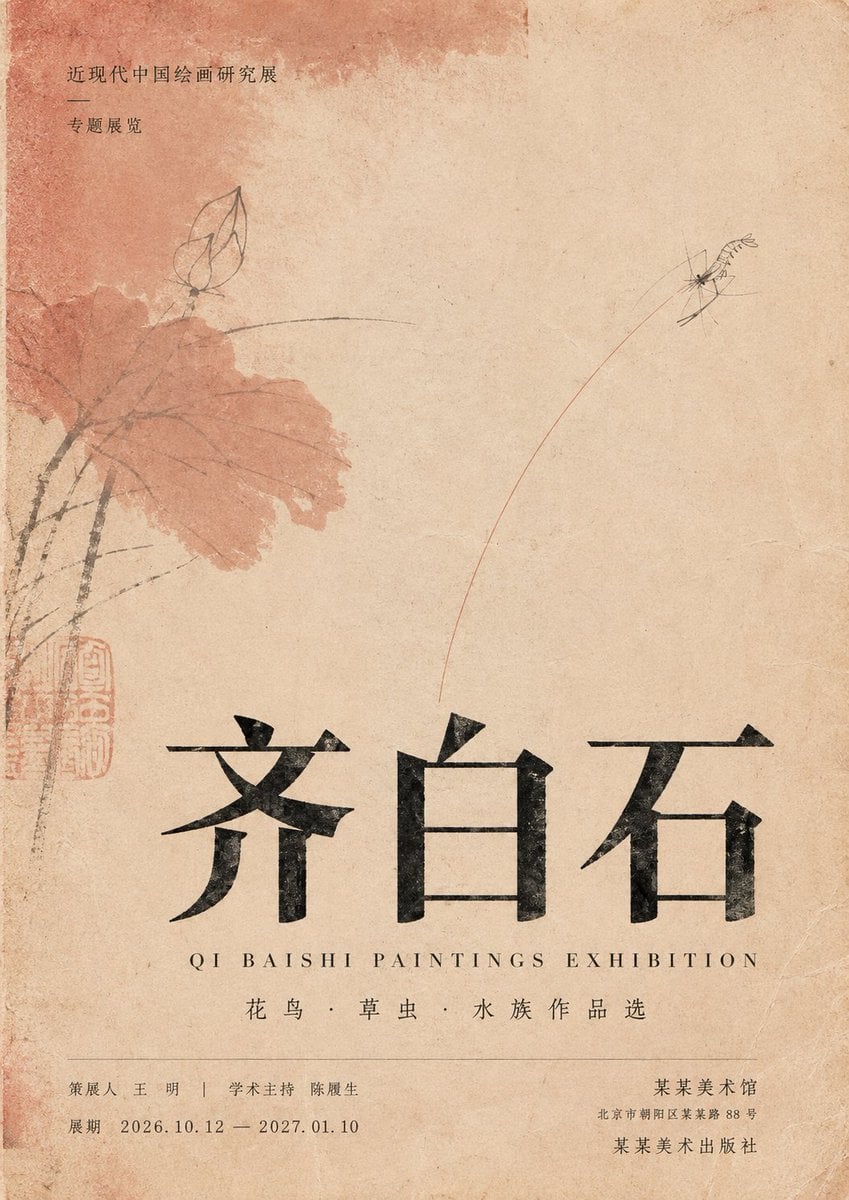
Generate an image with the temperament of an old book cover centered around [Subject]: the overall composition is a warm, pale red paper plane. The subject does not occupy the frame as a realistic entity but is decomposed into sparse line drawings, translucent color blocks, cropped auxiliary shapes, and a few symbolic traces, allowing the viewer to first perceive the quiet negative space and publication order before reading the thematic content. The background resembles coarse fiber paper oxidized by time, with a base color of overprinted low-saturation pink-orange, ochre red, and pale flesh tones; colors are concentrated on the upper edge, left side, and a few local ink marks, while the center retains a large area of light-colored empty space. Paper grains, scuff marks, light creases, tiny scratches, and uneven fading act upon the paper base and pale ink layers, while the black main title area remains relatively clear to avoid global dirtiness. The main graphic derived from the subject is composed of fine-line contours, slightly misaligned translucent printed blocks, and hand-drawn curves; contours may extend from the edges of the frame or be cropped, with attached elements forming a slow-moving reading path along the top or sides. A very thin arc or lead line connects a small distant subject symbol to the empty space above the title. The main title uses very large black Chinese display characters, horizontally pressed in a position slightly above the lower half of the screen; the glyphs have the high-contrast skeleton of Songti or hand-carved wooden movable type, with solid vertical strokes, slender horizontal strokes, and wedge-shaped endings with slight burrs. Character spacing is restrained but not crowded, becoming the heaviest visual anchor of the entire image. Below it, a calm publication information layer is established using small uppercase English and even smaller Chinese subtitles, with wide letter spacing and centered alignment, creating a distinct scale difference with the giant Chinese characters. The top and bottom contain only a small amount of author, translator, publisher, or thematic description text, as restrained as an old academic book cover. All graphics, text, and paper textures should exhibit low ink volume printing, slight registration misalignment, ink absorption at the edges, and the soft graininess of a scan. The image must not become a modern clean poster, an illustration collage, or a high-contrast commercial advertisement; preserve the quiet tension between the large negative space, pale red paper surface, giant black characters, sparse line drawings, and the publication information layer.
Subject: [Subject]
Copy PromptCopied!Low SaturationWarm TonesMinimalismQuietnegative spaceasymmetrical balanceGPT Image