Avant-Garde Luxury Editorial Poster Architect
Prompt
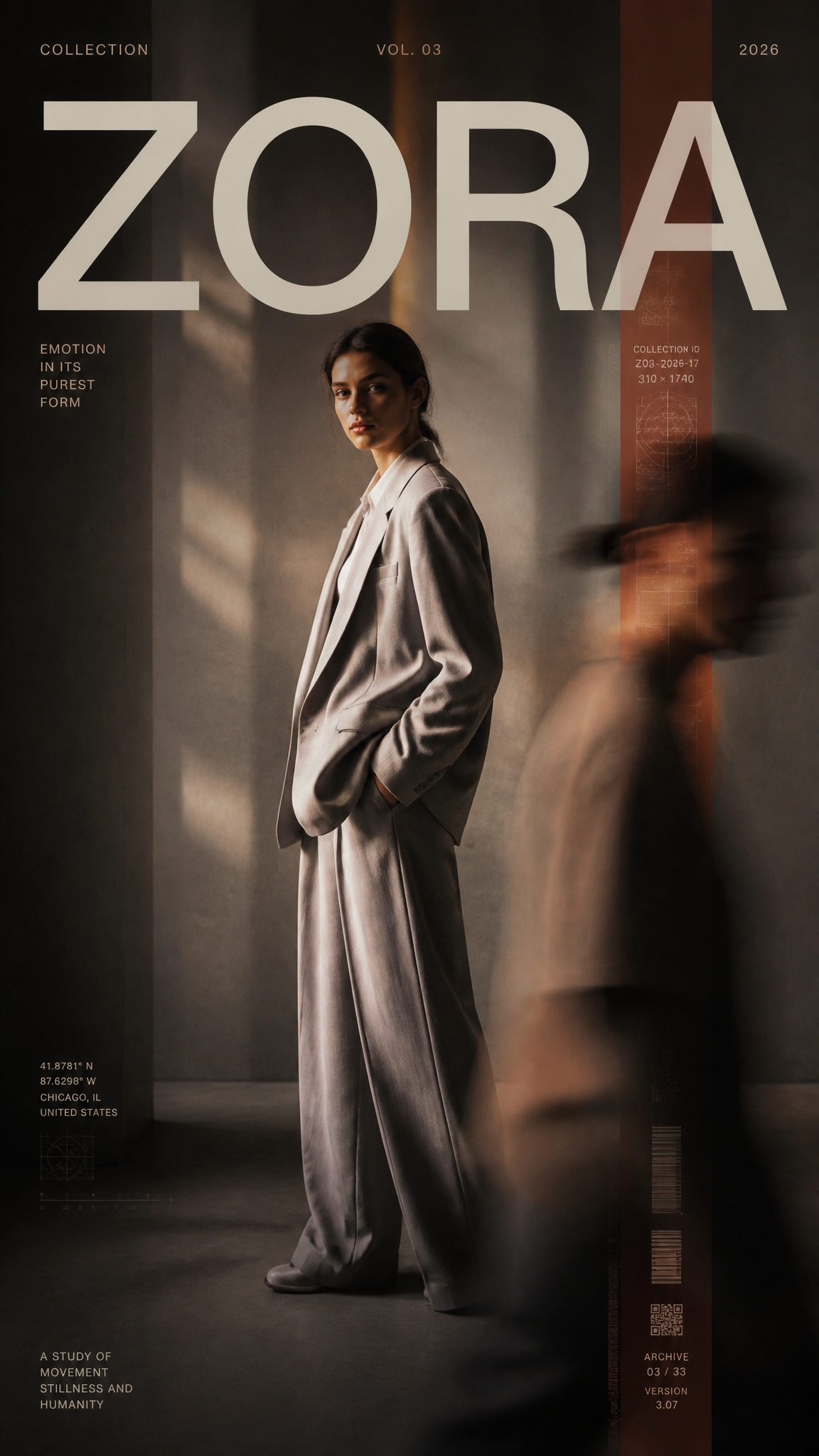
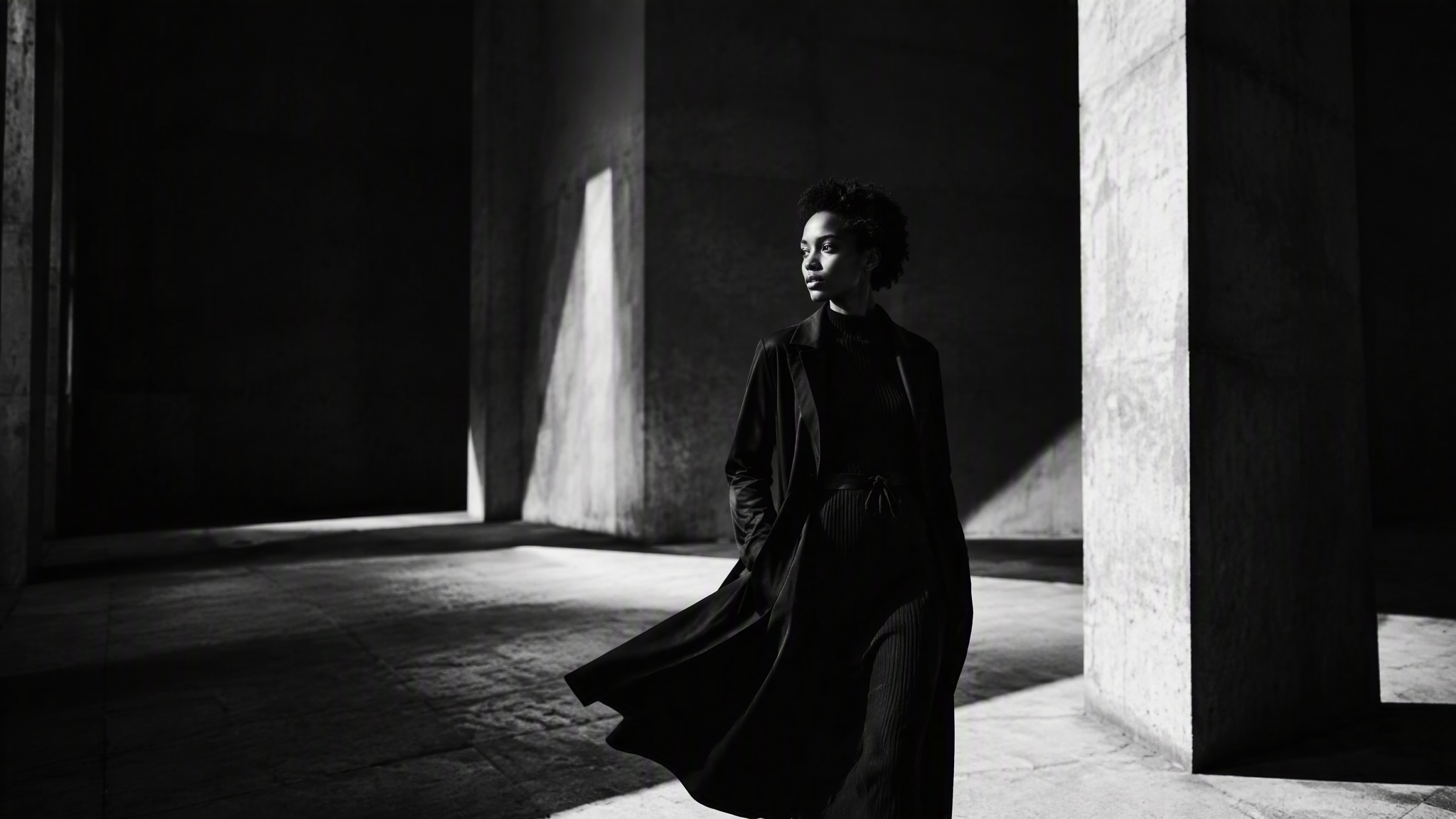
# SPATIAL EDITORIAL POSTER GENERATOR### Luxury Editorial Portrait CollectionObjectiveCreate a 9:16 premium editorial portrait poster that feels like a cover story from a world-class fashion magazine, a museum exhibition print, or a Behance Featured Project. The composition should prioritize spatial depth, visual hierarchy, and the interaction between the subject and graphic design elements rather than relying on decorative effects.---## Project InformationCollection Title: ZoraVolume: Vol. 03Year: 2026Subject: [Fashion Model / Artist / Athlete / Original Character]Theme: [Emotion or Concept]Primary Accent Color: [Single Accent Color]---# Creative DirectionThe image should feel like a luxury editorial campaign photographed for an international fashion publication.Every design element must appear intentionally integrated into the composition.Avoid the feeling of "graphic overlays."Typography, blur, reflections, foreground objects, repeated portrait fragments, and architectural forms should naturally occupy physical space within the scene.The final result should resemble a carefully art-directed photograph rather than a digitally decorated image.---# Visual HierarchyPrioritize the following order:1. Subject2. Spatial Relationship3. Typography4. Foreground Depth5. Editorial Graphics6. Supporting DetailsEvery element should reinforce the central idea rather than compete for attention.---# CompositionUse:* Swiss Editorial Grid* Golden Ratio* Rule of Thirds* Large Negative Space* Layered Depth* Strong Perspective* Architectural Alignment* Balanced AsymmetrySeparate the composition into:ForegroundMidgroundBackgroundwith clearly defined depth transitions.---# MaterialsWhenever appropriate include premium materials such as:* Museum cotton paper* Matte finish* Black resin* Brushed titanium* Smoked glass* Acrylic panels* Chrome* Satin aluminum* Fine paper fibers* Transparent film overlays---# LightingUse cinematic lighting only.Possible combinations:* Soft dusk* Museum spotlight* Window light* Volumetric haze* Rim lighting* HDR* Soft bloom* Global illumination* Atmospheric depth* Gentle shadowsLighting should define form instead of overwhelming the composition.---# TypographyTypography should function as architecture.Use:* Oversized Helvetica-inspired type* Swiss hierarchy* Wide tracking* Clean alignment* Layer interaction* Physical overlap* Partial occlusion* Perspective distortion when appropriateAvoid decorative fonts.---# Editorial GraphicsInclude subtle:* Blueprint overlays* Construction circles* Grid systems* Technical labels* Coordinates* Archive numbers* Measurement scales* CAD sketches* Barcode* QR code* Collection ID* Version numberOpacity approximately 5–8%.---# Surface QualityAdd subtle realism through:* Fine film grain* Paper texture* Micro scratches* Dust particles* Slight lens imperfections* Soft edge reflections---# Spatial Design Directions---## Direction 01 — BETWEEN LINESConceptTypography becomes architecture.A full-body fashion subject stands inside monumental oversized typography.The typography extends into physical space, wrapping around the figure like sculptural walls.Letters create perspective, shadows, and depth while remaining integrated into the environment.---## Direction 02 — VELVET HOURConceptThe relationship between stillness and movement.A sharply focused fashion subject occupies the midground.A second person passes extremely close to the camera as an elegant blurred foreground silhouette.The blur naturally frames the subject without obscuring them.Dusk lighting creates emotional tension and cinematic atmosphere.---## Direction 03 — SPLIT PRESENCEConceptIdentity fragmented through space.One sharply focused portrait anchors the composition.Uneven vertical portrait fragments appear throughout the layout.Some fragments are enlarged.Some are cropped.Some softly blurred.Some transparent.One bold accent-color vertical strip connects the entire composition.---## Direction 04 — PASSING LIGHTConceptTime represented
Copy PromptCopied!Swiss Designluxury editorialcinematicSophisticatedVolumetric Hazerim lightingBrushed TitaniumGolden Rationegative spacelayered depthForeground BlurGPT Image

![Waist-up editorial portrait of [CHARACTER] in a calm thre...](https://cdn.guidesref.com/trk_6aa8e56f77ab86.73969772.png)